CONFINED INFRASTRUCTURE ROBOTICS · HONG KONG × SHENZHEN

Make hidden risk observable.

PipeGuardian combines a collision-tolerant inspection robot, topside link and recovery, spatial sensing, and segment-level evidence management for closed pipelines and confined infrastructure.

Pre-validation · prototype development

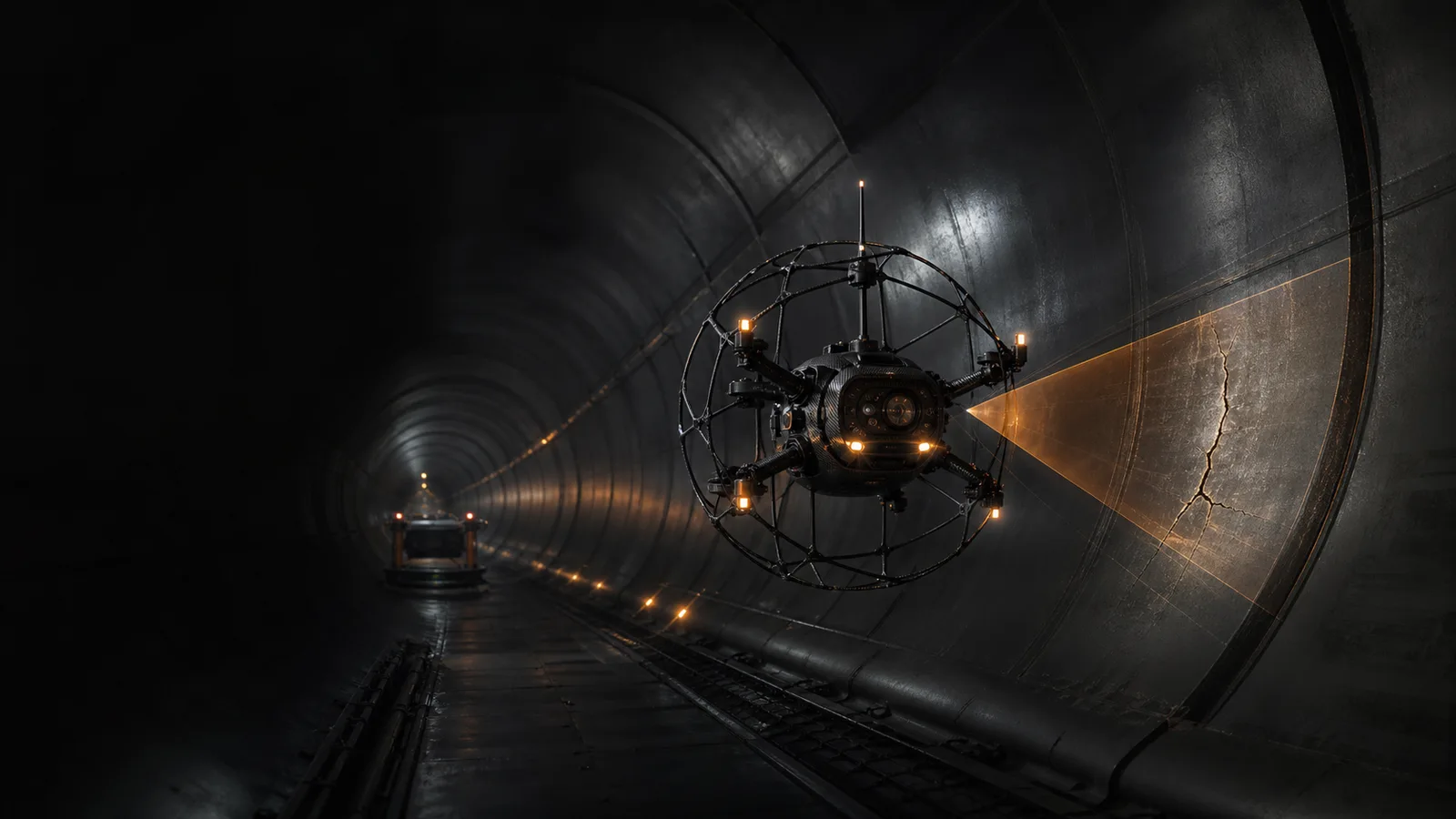
User-provided concept model image of a spherical caged inspection drone inside a closed pipeline
PRODUCT CONCEPT MODEL IMAGE · NOT A PRODUCTION PHOTO OR FIELD VALIDATION
≥600 mmMVP target diameter; not yet validated
18 monthsRequirements to benchmark pilot
G0—G6Evidence-gated development
RMB 20MRecommended pre-money valuation

SYSTEM, NOT A GADGET

Flight is one part of the mission.

The product is the full loop: safe deployment, recoverable robotics, transparent link quality, synchronized sensing, human review, and an auditable asset record.

PG-AIR

Collision-tolerant inspection

Serviceable spherical cage, low-light/night vision, thermal imaging, depth/LiDAR and dedicated gas-sensor interfaces. Thermal contrast is not presented as direct gas detection.

PG-RELAY

Link and recovery assurance

Start with tethered or wired backup and a small number of recoverable relay nodes.

PG-DOCK

Topside station

Power, data offload, health checks, transport, cleaning, and manual recovery.

PG-ATLAS

Segment-level evidence

Synchronize imagery, depth, gas and pose; retain model version, confidence and human review.

PG-X

Planned emergency-payload interface

Fire-suppression and insulation-tape modules remain pre-research concepts behind independent safety, authorization and validation gates.

FIRST MVP

Controlled before complex

Initial tests target dry, de-energized, non-explosive, recoverable environments. Pressurized gas, submerged pipes, explosive atmospheres and active intervention are outside the first MVP.

INSIDE ONLY

Closed infrastructure, not exterior inspection.

Target use cases include large pipe tunnels, underground water networks, drainage systems, utility corridors and industrial passages from the inside.

HK × SZ

Evidence in Hong Kong. Engineering in Shenzhen.

Use Hong Kong research, university and public-sector trial mechanisms to build credible evidence; use Shenzhen’s engineering and supply-chain depth for prototypes and small-batch delivery.